- Home
- Institute
- Laboratories
- Science
- Events
- Journal
- News
- Contact
- Feedback
From June 15 to 18, 2026, the R.G. Biyashev Information Security Laboratory of the Institute of Information and Computational Technologies under the Science Committee of the Ministry of Science and Higher Education of the Republic of Kazakhstan hosted a hybrid-format round table-seminar entitled “Post-Quantum Cryptography and Information Security in the Era of Digital Transformation.”
In the context of the rapid development of digital technologies, artificial intelligence, and quantum computing, ensuring reliable information protection has become one of the most important challenges facing modern society. Particular attention is being paid by the scientific community to the advancement of post-quantum cryptography, a promising field focused on developing cryptographic mechanisms capable of resisting threats posed by future quantum computers and ensuring the security of government information systems, digital services, and critical infrastructure facilities.
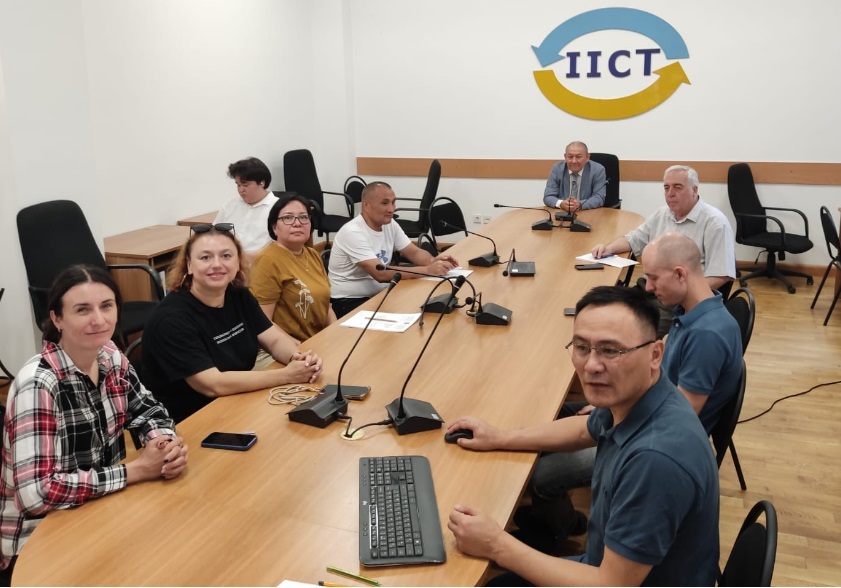
The event brought together researchers from the Institute of Information and Computational Technologies (IICT) and representatives of the Southern Federal University. Among the invited participants were Associate Professor Evgeniya A. Ishchukova, Candidate of Technical Sciences, and Associate Professor Ekaterina A. Maro, Candidate of Technical Sciences.
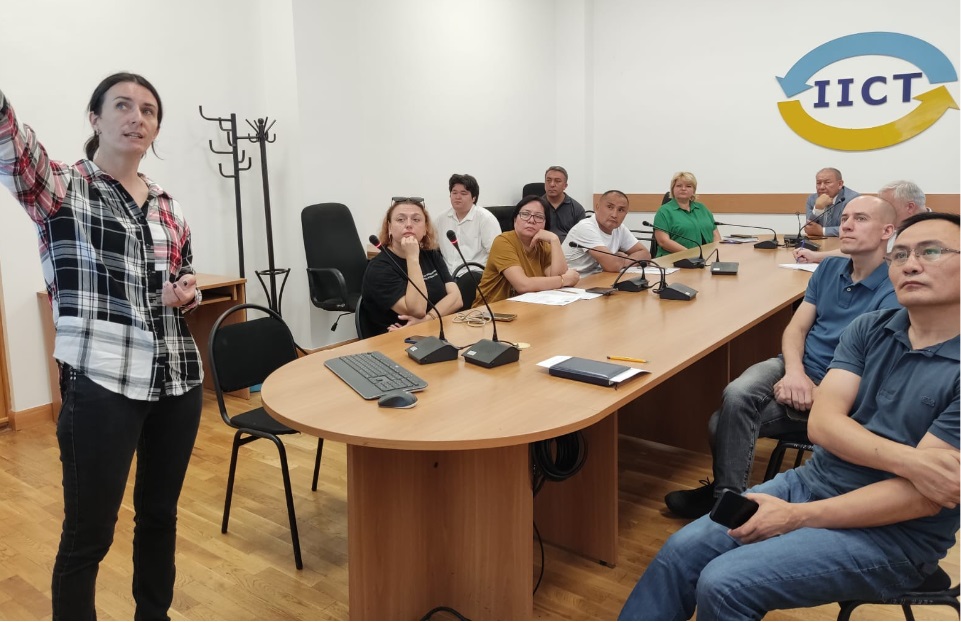
During the seminar, participants presented and discussed research reports addressing current issues in modern cryptography and information security, including:
The participants discussed current trends in the development of post-quantum cryptographic technologies, approaches to evaluating the security and efficiency of emerging algorithms, and prospects for their application in the context of digital transformation and increasing information security requirements.
In addition to the scientific presentations, the event included a discussion of ongoing scientific and practical projects carried out at the Information Security Laboratory under the supervision of PhD K.T. Algazy and K.S. Sakan. The meeting reviewed current research results, promising directions for future project development, and opportunities for involving master’s students, doctoral candidates, and early-career researchers in scientific activities.
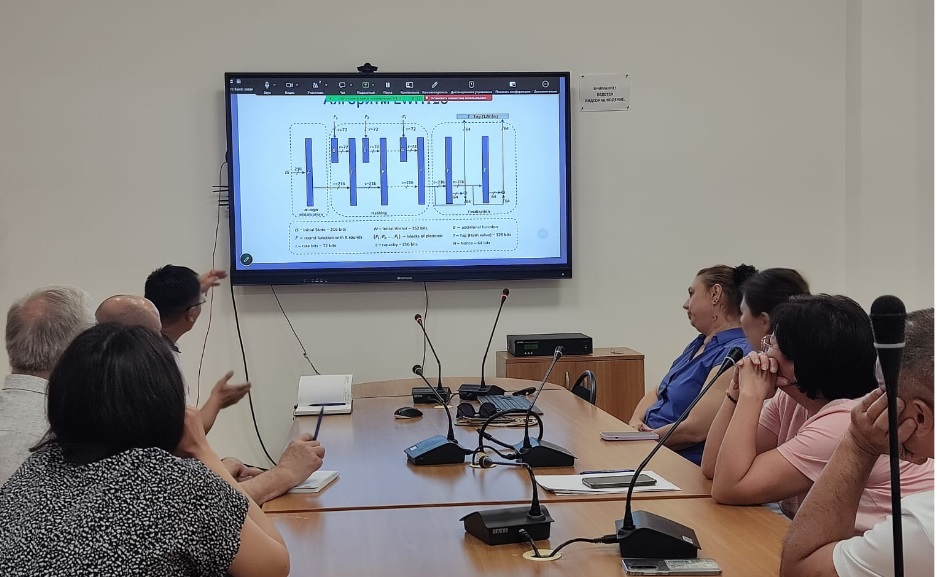
Such scientific seminars provide an important platform for the exchange of research experience, the strengthening of international cooperation, and the discussion of promising research directions aimed at developing next-generation information security technologies and reliable cryptographic protection mechanisms.