- Home
- Institute
- Laboratories
- Science
- Events
- Journal
- News
- Contact
- Feedback
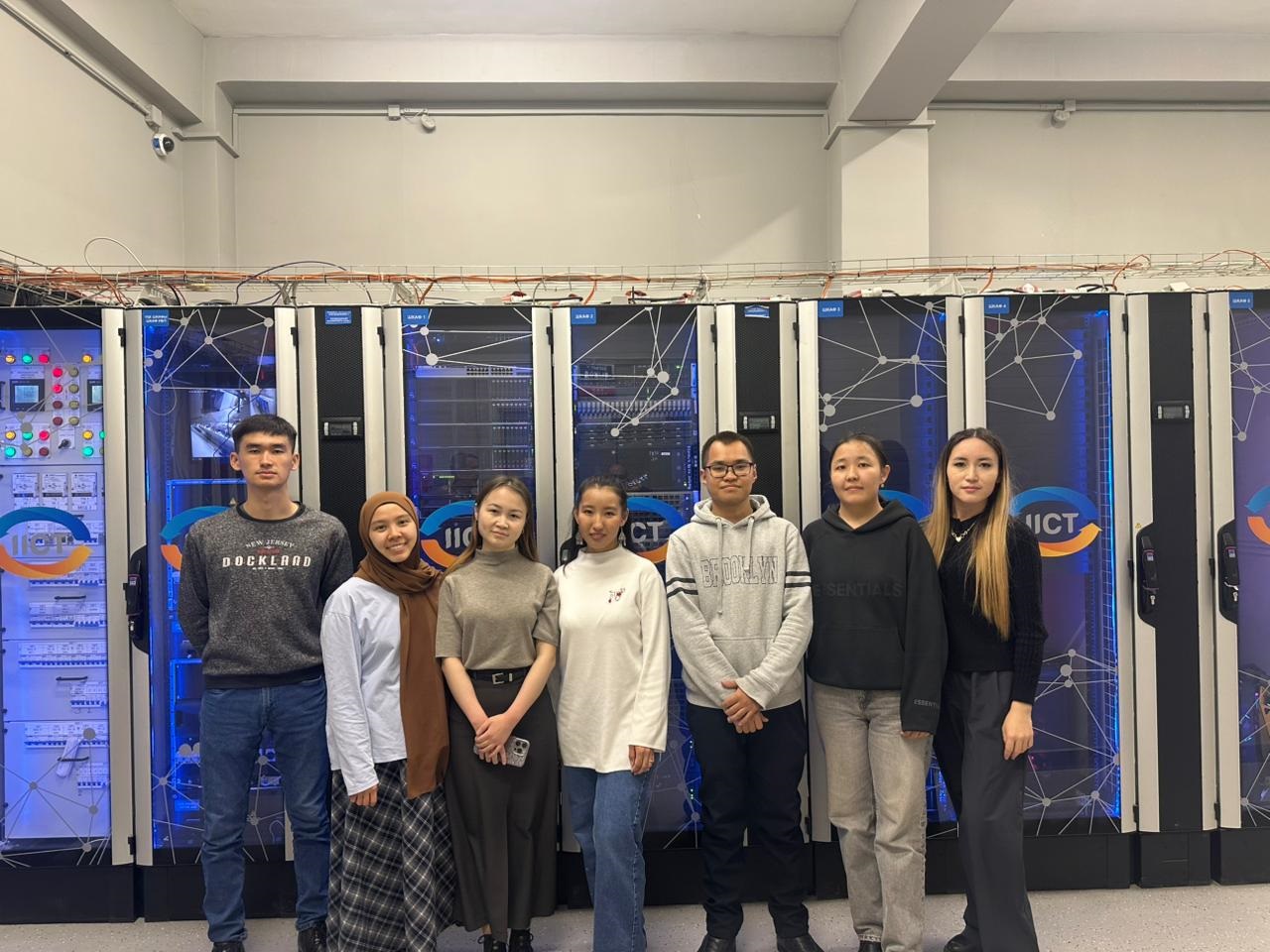
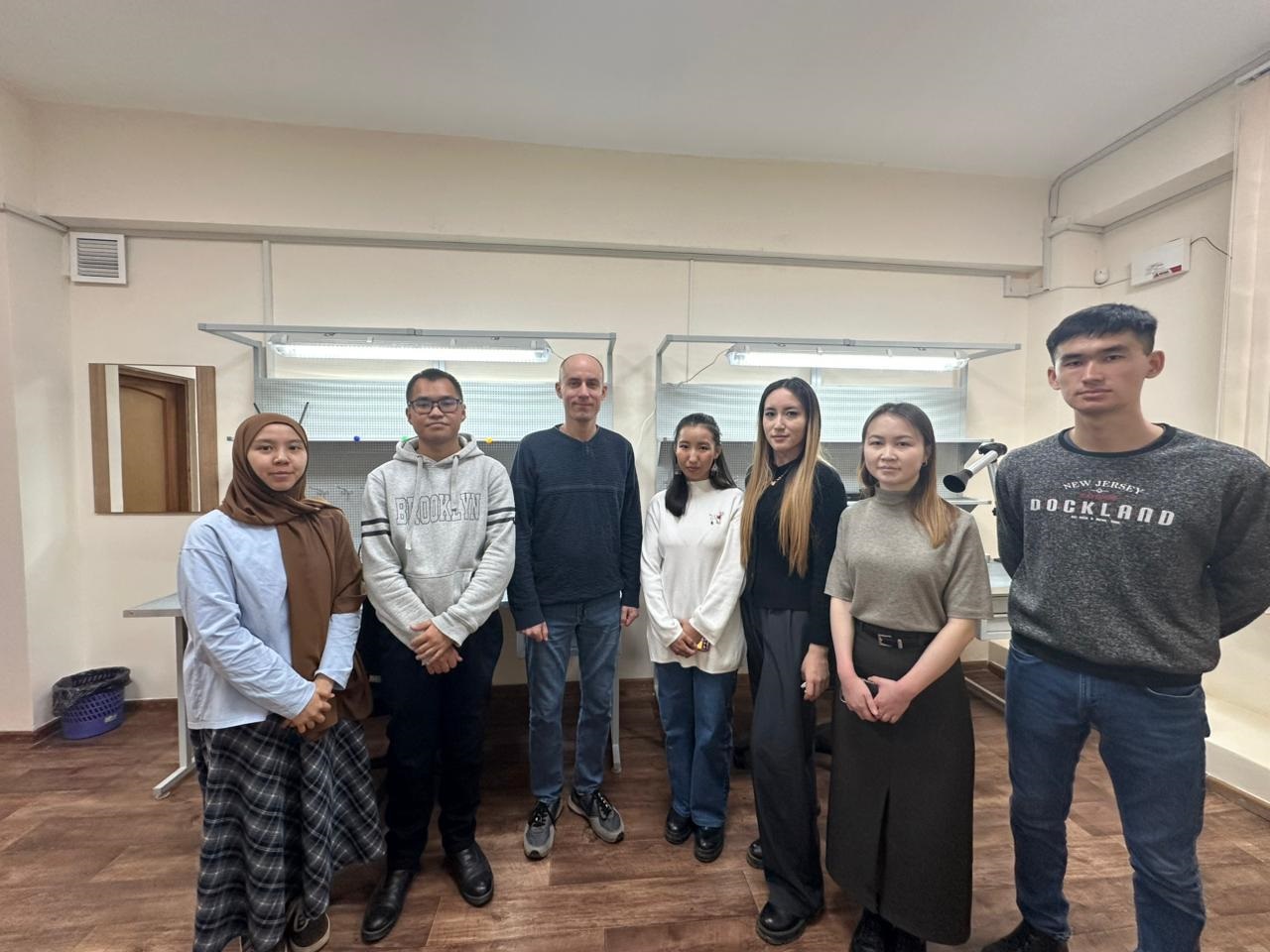
From March 3 to March 20, 2026, second-year master’s students enrolled in the degree programs “7M05402 – Mathematics” and “7M05408 – Computational Science and Statistics” at Al-Farabi Kazakh National University completed a research internship at the Institute of Information and Computational Technologies.
The internship was organized at the Institute under the supervision of Bektemessov Maktagali Abdimazhitovich, General Director, Academician of NIA RK, Professor, and Doctor of Physical and Mathematical Sciences. The primary objective of the internship was to enhance the research competencies of the master’s students, study modern computational technologies, and strengthen the integration of theoretical knowledge with practical skills.
As part of the internship program, the participants studied the history of the Institute, its mission, organizational structure, the activities of the Scientific Council, and its key research areas. In addition, the participants worked at the Central Scientific Library, where the master’s students worked with the primary and rare collections, manuscript materials, improved their skills in using electronic resources, and analyzed international scientific publications.
During the internship, the students analyzed the results of their research, assessed their scientific validity, and compared them with national and international sources. Particular attention was given to improving sections of their master’s theses in accordance with contemporary academic standards.
One of the key stages of the internship was the study of the Research Laboratory of Information Security named after Professor Biyashev Rustem Gakashevich. The students examined the operating principles of modern hardware and software systems used in cryptographic experiments and explored digital signature algorithms, authentication and verification methods, as well as approaches to ensuring the security of Internet of Things (IoT) devices.
A meeting was also held, during which the activities of the “Kópqyrly” workshop led by Kazakh architect Saken Zhomartovich Narynov were presented. The participants were introduced to current scientific and technical projects, including engineering solutions for improving unmanned aerial vehicles, as well as developments related to the automated design of casting molds for the steel industry.
One of the projects presented focuses on the development of an algorithm based on artificial intelligence and photogrammetry methods for creating complex casting molds. The proposed approach aims to optimize the production process, reduce preparation time, and improve the accuracy of final products. The use of advanced technologies facilitates both the design and manufacturing stages, ensuring high precision when working with complex geometries.
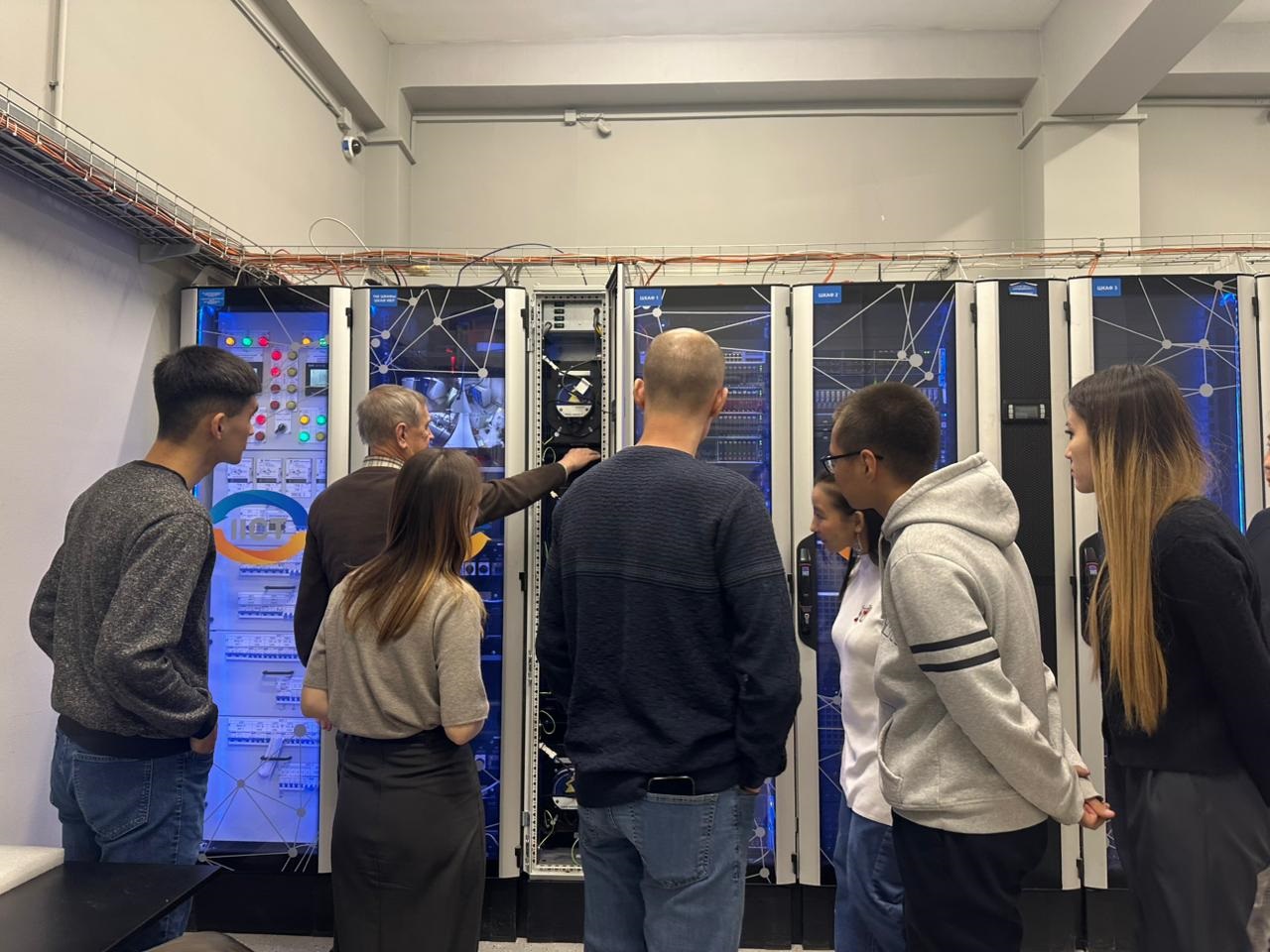
As part of the internship, the participants also studied the operating principles of the Institute’s high-performance supercomputer and gained insight into its capabilities for scientific computing. Its applications in artificial intelligence, big data processing, and scientific modeling were demonstrated.
In general, the internship proved to be an effective platform for enhancing professional competencies, advancing research skills, and acquiring experience with modern technologies. The knowledge and practical experience gained provide a solid foundation for future scientific work and the application of research findings.